Why Sahil Adeem and Engineer Mirza Split Pakistan’s Youth
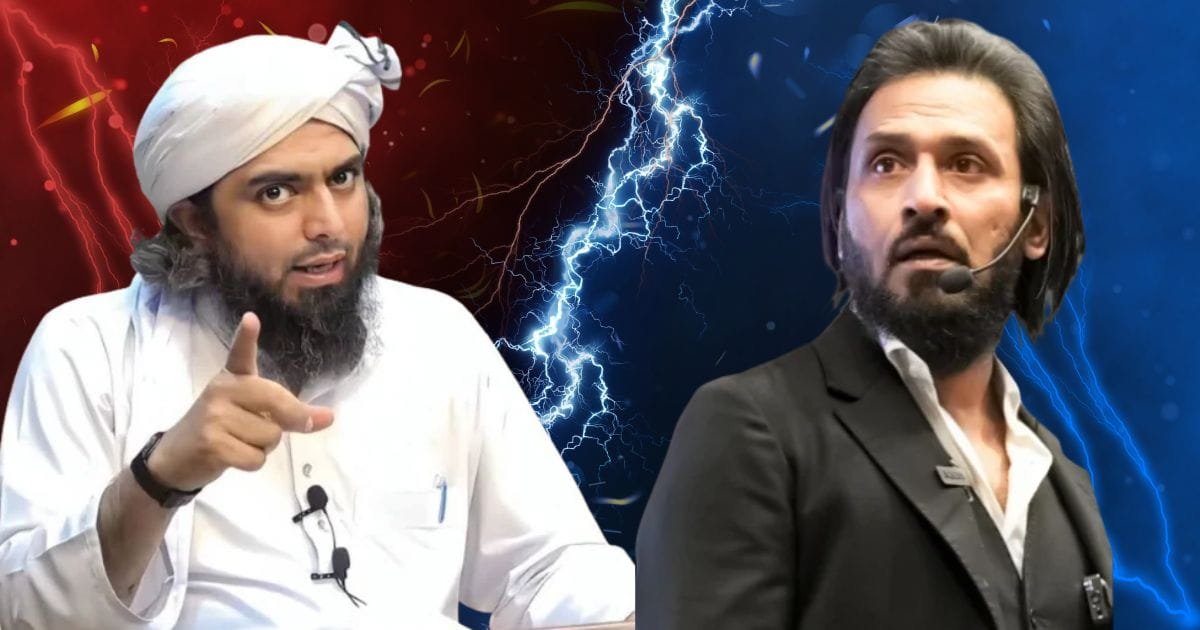
Few debates fire up Pakistani social media like Sahil Adeem vs Engineer Mirza. Both men built huge followings outside the traditional madrassa system, both speak mainly to young Muslims, and both regularly challenge mainstream religious voices. Yet their methods, topics and styles could hardly be more different.
This guide compares them side by side, fairly and without taking sides on religious questions. It covers who they are, how they teach, what they focus on, and the controversies each has faced.
Editor’s note: Compass Pakistan does not endorse or reject either speaker’s religious views. For guidance on matters of faith, please consult a qualified scholar you trust.
In this comparison
- Sahil Adeem vs Engineer Mirza at a glance
- Who is Engineer Muhammad Ali Mirza?
- Who is Sahil Adeem?
- Difference 1: Background
- Difference 2: Method
- Difference 3: Favourite topics
- Difference 4: Style and platforms
- Difference 5: Stance on sects
- Difference 6: Controversies
- Difference 7: Legal battles
- What they have in common
- Questions people ask
Quick answer
The biggest difference between Sahil Adeem and Engineer Muhammad Ali Mirza is method. Mirza is a Jhelum-based engineer who builds his lectures on the Quran and Hadith, citing classical books, and focuses on sectarian disputes and Islamic history. Sahil Adeem is a psychologist and public speaker who blends Quranic ideas with psychology, science and earlier scriptures, focusing on youth, critical thinking and end-times themes.
Engineer Muhammad Ali Mirza
Engineer · Jhelum · Born 1977
- Quran and Hadith-based lectures
- Runs a research academy in Jhelum
- About 3.1 million YouTube subscribers (2025)
- Facing a blasphemy case, currently on bail
Sahil Adeem
Psychologist · Public speaker · Born 1984
- Blends Islam, psychology and science
- Podcasts, TV shows, tours and online classes
- Son of poet Adeem Hashmi
- Criticised in 2024 for remarks about women
Sahil Adeem vs Engineer Mirza: side-by-side comparison
| Area | Engineer Mirza | Sahil Adeem |
|---|---|---|
| Profession | Mechanical engineer | Psychologist, trainer, speaker |
| Base | Quran-o-Sunnat Research Academy, Jhelum | Online academy, podcasts, tours |
| Main sources | Quran, Hadith, classical books | Quran plus psychology, science and earlier scriptures |
| Core topics | Sectarian disputes, history, rulings | Youth, critical thinking, end times, parenting |
| Format | Long lectures and Q&A sessions | Podcasts, TV debates, classes, talks |
| Tone | Calm, reference-heavy | Energetic, motivational |
| Main controversy | Blasphemy case before the courts | 2024 remarks about women |
Who is Engineer Muhammad Ali Mirza?
Muhammad Ali Mirza, widely known as Engineer Mirza, was born on 4 October 1977 in Jhelum, Punjab. He studied engineering at the University of Engineering and Technology (UET), Taxila, and has worked as an engineer in a government department.
He runs the Quran-o-Sunnat Research Academy in Jhelum, where he records weekly lectures and question-and-answer sessions. By November 2025, his YouTube channel had about 3.1 million subscribers.
Mirza presents himself as non-sectarian and says he teaches from the Quran and authentic Hadith. His critics, however, accuse him of using disrespectful language about revered religious figures, a charge his supporters reject.
Who is Sahil Adeem?
Sahil Adeem was born in 1984, according to public profiles, and is the son of the well-known Urdu poet Adeem Hashmi. He describes himself as a psychologist and, according to his public profiles, has worked as a corporate trainer and business strategy adviser.
He became widely known through podcasts and TV appearances, especially among young urban audiences. Today he runs online classes on critical thinking, Quranic study and education, alongside a regular podcast and speaking tours, including in the UK.
“Sahil Adeem is the man of future and the need of today.”
— Sahil Adeem, describing himself on social media
Background: engineer vs psychologist
Engineer Mirza
An engineering graduate who says he spent years studying the Quran, Hadith and classical works on his own. His lectures reflect that bookish, research-style approach.
Sahil Adeem
A psychologist and trainer who brings ideas from human behaviour, motivation and strategy into his talks. As a result, he often frames religion as a tool for personal and social change.
Method: how they use the Quran and Hadith
Engineer Mirza’s approach
Mirza’s lectures centre on the Quran and Hadith collections, and he often cites specific books and references on camera. His regular message is that Muslims should judge every claim against these primary sources rather than follow a sect blindly.
Sahil Adeem’s approach
Sahil, by contrast, draws on a much wider range. Commentators have noted that he refers to the Torah and the Bible alongside the Quran when discussing shared themes. He also links Quranic stories to modern ideas such as space travel and time.
His supporters see this as fresh, big-picture thinking. On the other hand, traditional scholars argue that some of his interpretations go beyond what the sources support.
Favourite topics: history vs the future
Engineer Mirza often discusses
Sectarian differences, early Islamic history, everyday religious rulings, and questions sent in by his audience.
Sahil Adeem often discusses
The end times, including Dajjal and Yajuj Majuj, critical thinking, parenting, education, mathematics and the role of Muslim youth.
Sahil’s 2022 podcast discussion of Yajuj Majuj and Dajjal was one of his most debated appearances. In it, he questioned popular ideas about where these figures are today, which drew strong reactions from traditional viewers.
Style and platforms
Mirza’s content follows a fixed format: a long lecture from his Jhelum academy, followed by audience questions. The tone is measured, and he rarely appears on talk shows.
Sahil, meanwhile, is a media performer. He appears on popular podcasts and TV debate shows, runs paid online batches, and tours cities at home and abroad. His delivery is energetic and motivational, which suits short viral clips.
Stance on sects
Rejecting sectarian labels is the core of Mirza’s identity. His academy describes its purpose as promoting non-sectarian Islam based on the Quran and Sunnah rather than any one school of thought.
Sahil has also addressed sectarian labels in his podcast and encourages listeners to question inherited views. However, his focus is broader, covering self-development, leadership and the future of the Muslim world.
Controversies: what sparked the backlash
Sahil Adeem and the 2024 ‘women’ row
In June 2024, on the SAMAA Digital show Mukalma, Sahil said that 95% of women in Pakistan were ignorant. When a woman in the audience asked him to apologise, he refused, and the clip went viral.
A resolution condemning his remarks was tabled in the Sindh Assembly by PPP lawmaker Marvi Faseeh. Later, journalist Umar Cheema, who had first criticised the episode, alleged that it had been staged, which added another twist to the debate.
Engineer Mirza and repeated threats
Mirza’s critics accuse him of disrespecting revered religious figures, and he has faced repeated threats as a result. He has survived several attacks at his academy, including a knife attack in March 2021 and an assault in February 2026.
Legal battles
In August 2025, Jhelum police detained Mirza under public order laws and sealed his academy. A case was then registered against him under Section 295-C of the Pakistan Penal Code and Section 11 of the Prevention of Electronic Crimes Act.
- December 2025: the Lahore High Court’s Rawalpindi bench granted him bail, and he was released from Adiala Jail.
- May 2026: the Islamabad High Court declared the Council of Islamic Ideology’s 2025 opinion against him null and void, ruling that the Council cannot decide criminal liability.
- Now: the criminal case itself remains before the courts. Bail does not decide guilt or innocence.
The CII opinion was “illegal, without lawful authority, and null and void.”
— Islamabad High Court ruling, as reported in May 2026
Compass Pakistan does not repeat or discuss the remarks at the centre of the case. The matter is for the courts to decide.
What do Sahil Adeem and Engineer Mirza have in common?
- Both built their following online, outside the traditional seminary system.
- Both speak mainly to young, educated Pakistanis, at home and abroad.
- Both encourage followers to question inherited religious views.
- Both are frequently criticised by mainstream religious scholars.
- Both have become flashpoints for wider debates about who gets to speak for Islam in Pakistan.
How to listen critically to any religious speaker
- Check the reference: look up any verse or Hadith that is quoted, in a reliable translation.
- Watch the full lecture: short viral clips often remove important context.
- Compare views: hear how scholars from different schools explain the same issue.
- Ask a qualified scholar: for personal religious rulings, speak to someone trained in Islamic jurisprudence.
- Keep disagreement respectful: online anger has led to real violence against public speakers in Pakistan.
Questions people ask
Their method. Engineer Mirza builds his talks on the Quran and Hadith, citing classical books and focusing on sectarian disputes and history. Sahil Adeem mixes Quranic ideas with psychology, science and earlier scriptures, focusing on youth, critical thinking and end-times themes.
No. He is a mechanical engineer from Jhelum who built his religious following through his own study and YouTube lectures, rather than through a traditional seminary.
Sahil Adeem is a Pakistani public speaker who describes himself as a psychologist and trainer. He is the son of the poet Adeem Hashmi and is known for podcasts, TV appearances and lectures on Islam, psychology and the future.
A blasphemy case registered against him in 2025 is still before the courts. He was granted bail in December 2025, and in May 2026 the Islamabad High Court declared the Council of Islamic Ideology’s opinion against him null and void. Bail does not decide guilt or innocence.
He said on a SAMAA TV show that 95% of women in Pakistan were ignorant. The remark caused wide backlash, and a resolution condemning it was tabled in the Sindh Assembly.
The bottom line
- Different methods: Mirza is text-focused and reference-heavy; Sahil is wide-ranging and motivational.
- Different focus: Mirza looks at history and sects; Sahil looks at youth, the mind and the future.
- Different controversies: Sahil faced a public storm over women; Mirza faces a court case and real threats.
- Same challenge: both show how YouTube has changed who speaks for Islam in Pakistan.
Sources & Further Reading
- Council of Islamic Ideology has no authority to rule on criminal liability: IHC — DawnPrimary Source
- IHC says CII has no authority to determine criminal culpability — Business Recorder
- Engineer Muhammad Ali Mirza released from jail — The News
- Engineer Ali Mirza unhurt in Jhelum attack — The News
- Muhammad Ali Mirza — Wikipedia
- Sindh Assembly condemns Sahil Adeem’s remarks on women — The Express Tribune
- Sahil Adeem draws ire for saying ‘95% of women are ignorant’ — Aaj News
- Umar Cheema suggests SAMAA TV episode was preplanned — Journalism Pakistan
- Disputed talk on Yajuj Majuj and Dajjal by Sahil Adeem — BOL News
- Sahil Adeem, the Bible, the Torah and sectarianism — New Age Islam

Dr. Noman Ashraf
Dr. Noman Ashraf is an Islamic thinker and author with a keen eye on Islamic history, contemporary issues, and the politics and narratives shaping the Muslim world. He writes balanced, well-researched analysis that connects past lessons with present realities.